
What are agentic AI systems
Agentic AI assistants are not just reactive tools but proactive systems capable of acting independently. They are designed to perform tasks without constant human input, combining autonomy and initiative to operate with greater purpose.
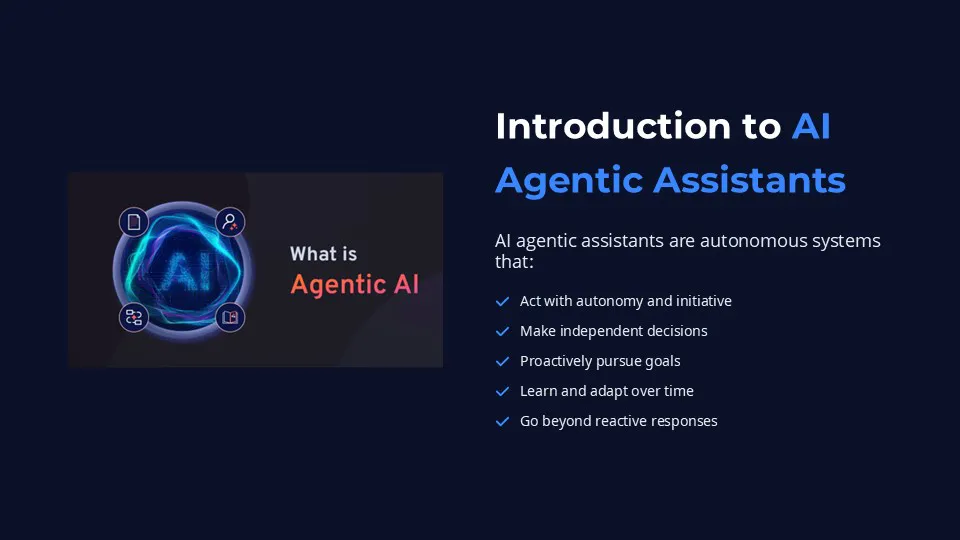
Unlike traditional assistants that only follow direct commands, agentic systems can identify goals, assess situations, and decide on the best actions to achieve meaningful outcomes.
Autonomy and decision-making
The key strength of agentic AI lies in autonomous decision-making. Instead of waiting for users to define every step, these systems analyze context and determine the most suitable actions. They prioritize goals, anticipate challenges, and adjust their strategies dynamically. This independence enables organizations to benefit from faster responses, reduced workload for staff, and improved efficiency across complex and ever-changing processes.
Learning and adaptation
Agentic AI is also characterized by continuous learning. Every interaction adds new data that strengthens its decision-making skills and contextual awareness. Over time, these assistants refine their ability to anticipate user needs, correct past mistakes, and adapt to unique environments. This creates a cycle of growth in which agents transform from basic tools into proactive partners that support strategy, creativity, and long-term organizational goals.
Future perspective
Agentic AI will continue to grow in capability and reach. As their reasoning, adaptability and independence improve, they will become embedded in daily business operations and strategic decision-making. Organizations will rely on them not only for task execution but also for proactive advice and innovation. Their role will shift from simple support to key partners in shaping long-term success and competitive advantage.