
Although the terms are often confused, AI agents and AI assistants are fundamentally different. Traditional assistants perform tasks when instructed, remaining dependent on human commands. By contrast, agents take initiative.
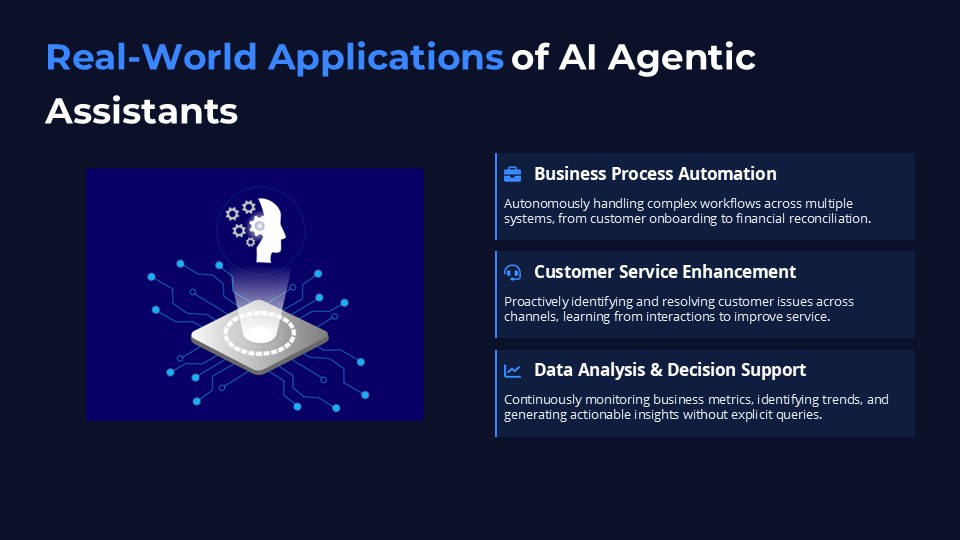
They interpret goals, plan steps, and act independently, bringing proactivity and autonomy to interactions. This distinction marks a major step forward in the way humans work with artificial intelligence.
Limitations of traditional assistants
Conventional assistants are restricted by their reactive nature. They lack context awareness and cannot adjust strategies without human prompts. Their value lies in handling routine tasks, but they are limited in complex or unpredictable scenarios. Without autonomy, they remain tools that require supervision, unable to generate solutions or anticipate needs. This limits their role to narrow, predefined situations.
The power of agentic AI
Agentic AI systems overcome these restrictions through independence and adaptability. They assess situations, create workflows, and adjust actions dynamically. They understand broader contexts and can learn from feedback, enabling more intelligent behavior over time. This makes them capable of solving problems, driving innovation, and managing processes. By stepping beyond instructions, they deliver meaningful results that extend far past basic assistance.
The next stage
The shift from assistants to agents will reshape both business and daily life. Instead of passive tools, organizations will work with AI as active collaborators that contribute to decision-making, strategy, and creativity. This evolution represents a change in relationship: agents are no longer mere extensions of human intent but partners capable of sharing responsibility and shaping future outcomes together.