
From processes to service
Agentic AI is already proving its value across industries by automating processes and enhancing service delivery. Organizations use these systems for tasks like onboarding, compliance checks, and scheduling.
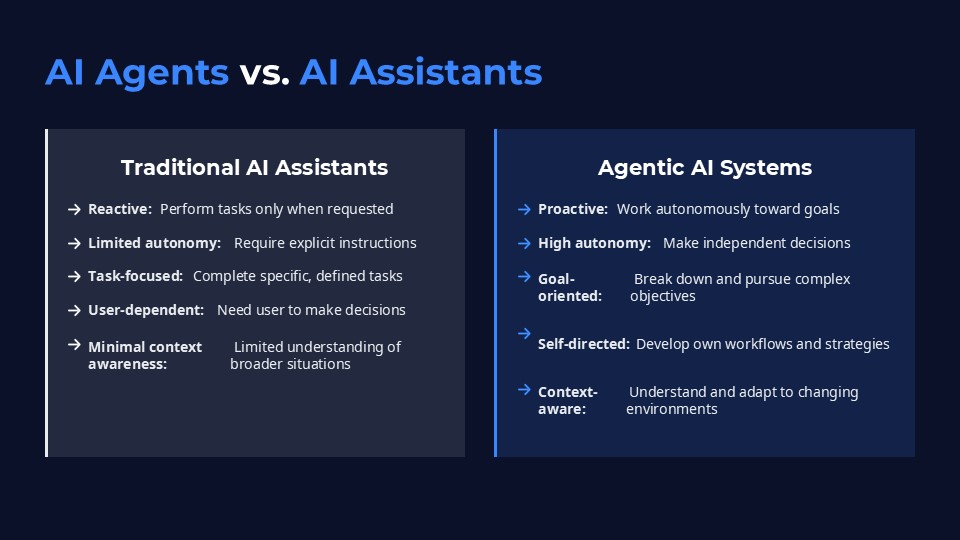
Unlike traditional automation, agentic AI can anticipate needs and respond proactively. By blending decision-making with adaptability, it creates tangible improvements in efficiency, reducing manual effort while increasing accuracy and overall reliability.
Efficiency and customer focus
Customer service is one of the areas most impacted by agentic AI. These systems proactively identify and resolve issues, often before customers notice a problem. This shift transforms service from reactive to predictive, strengthening loyalty and satisfaction. At the same time, back-office operations run more smoothly, as repetitive tasks are handled autonomously. The result is reduced costs, faster resolutions, and happier clients.
Decision-making and data analysis
Beyond service, agentic AI plays a central role in data-driven decision-making. By monitoring streams of organizational data, agents uncover hidden patterns, trends, and risks. This analysis occurs continuously and autonomously, offering leaders insights without the need for direct queries. Managers can make faster and more informed choices, boosting competitiveness and resilience. The combination of automation and intelligence fuels business agility.
Looking forward
The future of applications will expand rapidly. As adoption grows, agents will not only streamline workflows but also drive innovation in personalization, predictive analytics, and customer experience. Their ability to integrate across departments will break down silos, allowing organizations to operate with greater coherence and foresight. Over time, agentic AI will become central to both efficiency and long-term strategic growth.